How to use the blog

Want to check where we are and what we have been doing recently? In brief? Read the blog below called SAILING LOG. The other stories are about specific incidents or thoughts.


Wednesday, May 18, 2011

DAILY LIFE ON BOARD


There are lots of beautiful places to go;
lots of challenging things to do;
and lots of interesting people to meet.

We've seen a lot of Australia
using the boat as a launching pad. 
Broken Hill anyone?

Clubs are a feature of every Aussie
Port town. We sample them all. Fish and Chips is the safest order.

A common definition of cruising is
"boat maintenance in exotic locations".
Can't remember which exotic location
this was. Probably Coffs
after our dousing at the Port Macquarie
Bar

Public transport is the best:
ferries, bikes, busses, trains.
So the waiting.... Here waiting for our
friends at Avis to deliver a car.

Trial Bay Goal.  There are lots of
interesting out-of-the-way
places.

There is plenty of opportunity for quiet
contemplation of the natural world.
Here at Mutton Bird Island
overlooking the  marine park at Coffs 

Moonraker loves anchoring. 
Here at Yamba Boat Barbour


I like zooming around in the dinghy.

Even the ritual of papers and coffee
can be interesting.  Here on a Ferry
crossing the Clarence River

We love the marine rescue people and talk to them by radio every day we are on the move. (Our call sign is Victor Juliet November 3565).  Bless their cotton socks.

I like the quiet contemplation of the better things in life too.

We like to keep in touch with the real world.  But it is hard, even with the help of 3 VHF radios, one 27MHz radio, one UHF radio, one Sat phone, two mobiles, 2 x 3G internet accounts, 3 computers, an am.fm radio, a TV and and AIS system. 

My favourite time of day.

The tools have their own cabin (it's true!)
but they always seem to
come out and join the adults in the saloon.

Moonraker isa cutter-rigged sloop. 
Here she is with genoa, jib and main.


Dean on watch, well out to sea.

Me on watch. 
No-hands is OK as the
self-steering works most of the time

Off to do the shopping and washing

Dean and trusty dinghy, which planes at the drop of a hat.

This is one bar (at Brunswick Heads)
that we decided not to cross. But Moonraker has
surfed waves like this on
Port Macquarie, Yamba and Wide Bay bars.

I loved Nimbin.

And we love having friends, both new and old, on board.


Here we are with our MPS flying.  Beautiful sail.

Dean keeping a look out for a marker.


Sometimes all you needs is a
cup of tea and a nice sit down in
the saloon.

We are learning heaps.  I can do a
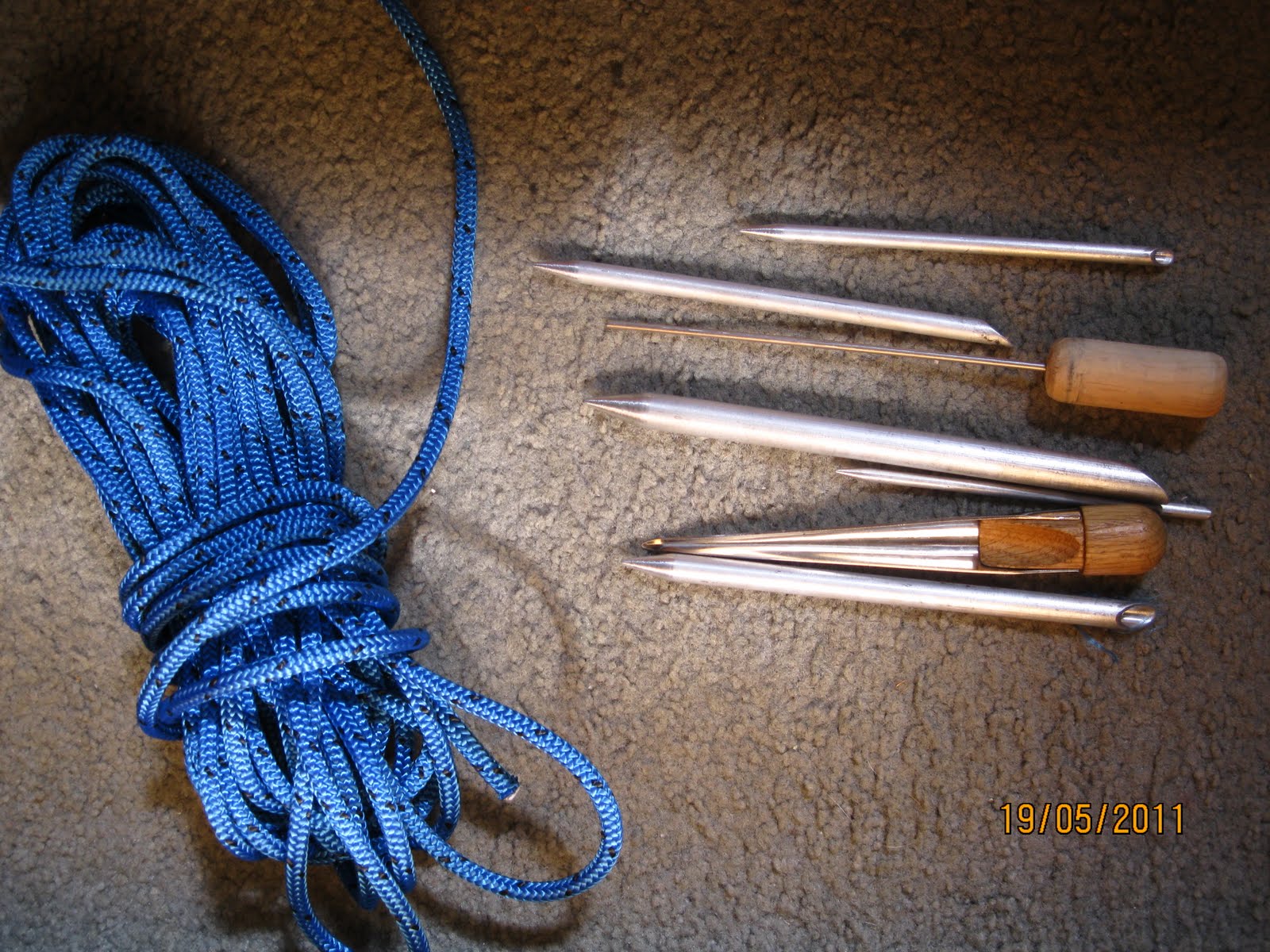
Locking Brummel splice on Dyneema.  Can you?


Bed-time reading. We have had 50 knots and storms
out to sea and 70 knots when
on a mooring.  Hope thats it for us.
But we are parepared anyway.

This is our engine and I know most of the parts now AND how they work.

Tuesday, April 26, 2011

MOONRAKER MEDAL APRIL 2011 AWARDED TO M SOLOMON

Moonraker Medal April 2011, Awarded to Mary Solomon for stepping up to the plate
We were refuelling, ready to board guests for a lovely weekend. One of Moonraker’s crew, imaging herself to be fit, athletic and 40 years younger than she is took an flying leap from the bow of the boat onto the fuel wharf several meters below. Between the exhilarating take-off and sudden landing, she remembered how old she is, and that her muscle sproing has long since sprung.  But it was too late. The result was knotted back muscles, excruciating pain plus incredulity and a distinct lack of sympathy from the other crew member.
At just that moment Mary arrived, in holiday mode.  She, with her partner Ken, had stolen a couple of days leave from a demanding job to join us on Moonraker on the Gold Coast. They flew from Sydney, and we had planned a gentle sail from Southport, through the Broadwater to Redcliffe on Morton Bay.  Mary was to relax, gently float along, reading books and watching the other boats.  The weather was fine(ish). I’m was to be navigator and sailing strategist, first aid person, washing-up hand, anchor man and sailing master. Dean was to cover helmsman duties, be chief engineer and chef. I can serve champagne and the scenery looks after itself. Ken is very handy as crew too.

Mary at the helm

Mary heard about the ‘great leap’, and immediately stepped up to the plate by sourcing a huge bag of ice from who-knows-where, applying it to the affected area.  She continued to step up to the plate the whole weekend.  On the practical side, she is really practical. Dishes need doing?  Lunches need preparing?  Need someone on the winch?  Mary got the hang of it all quickly.  On the more technical side, she stepped up to the mark too, inexperienced as she was.  Need to navigate between those red and green sticks and floats in the water? Mary studied the book on cardinal marks, beacons and rules of the sea, and by the end of the weekend I would trust her piloting us anywhere.  Need someone to take the helm? Mary applied herself to the helm with great concentration and accuracy.  And she is clearly a good manager as well. Need someone to manage the anchor or take the helm?  Mary supplied Ken to do that. Need a good desert that an injured cook could prepare? Mary was able to be encouraging and supervise the preparation of the Apple Crumble, and to disclaim any credit.  All in all, to quote from the Sherman and Sherman lyrics from the great Disney Classic Mary Poppins: 
Oh, it's a jolly holiday
With Mary
Mary makes your 'eart so light
When the day is gray
And ordinary
Mary makes the sun shine bright!
Oh 'appiness is bloomin'
All around 'er
The daffodils are smilin'
At the dove
Oh, it's a jolly holiday
With Mary
No wonder that it’s Mary that we love! 

MOONRAKER MEDAL, MARCH 2011 AWARDED TO D. ASHENDEN

Moonraker Medal, March 2011,  Awarded to D Ashenden for having formerly unrecognised talents
It was a pitch black night. Moonraker was 10 NM out to sea, on a passage from Iluka to the Gold Coast.  Unforecast winds were gusting to 50 knots. Forks of lightening (also unforecast) illuminated a chaotic sea. The boat was rocking and rolling. The radar was scary to look at, highlighting the heavy squalls continually overtaking us. The motor was chugging to support the fully reefed sails, their combined effort only just giving us speed over the ground against the south-bound SE Australian current. The Cape Byron Light blinked in the distance and the appearance of the occasional tanker kept us on our toes.  We felt a little apprehensive. But at least it was going to be a good night for testing our competencies for ‘short-handed crew watch-keeping ‘, which was why we were there after all. 
At about 10 pm, just after I took the first watch, we unexpectedly gybed.  At the same time a particularly violent roll sent the pot of stew flying, distributing rich aromatic lumps all over the carpet in the salon. At the same time the GPS decided to cut out, as it does occasionally. In accord with watch procedures, Dean got up to lend a hand.  I spent about 15 minutes below scooping up the worst of the stew and rebooting the GPS, while Dean kept watch. Bad move.  I should know by now what happens when I concentrate on head-down tasks, especially in the cabin, especially in wallowy seas, especially when surrounded by strong smells and engine fumes.  By the time I got back on deck I was truly unwell. 
Things got worse. While I tried to pull myself together, Dean did the routine check of the fuel filters. He came flying up into the cockpit. “Turn off the engine. The first filter is packed with gunk and the second one is cloudy.” 
So there we were. The engine was off, and possibly gunked-up; the seas were worse; the speed over the ground was precisely zero knots despite our considerable way; it was still stormy and dark and wet; one crew member was sick; the carpet was still stewy.  A plan of action was required, although to be honest I was past caring.
What to do?  Dean announced that he was going to change the fuel filters.  “Just keep a lookout,” he said and disappeared below.  10 minutes later he popped up.  “Let’s try that.”  We turned on the engine… cough, cough. No good.  Back into the engine goes Dean. “I think I forgot to bleed the air out of the filters”, he shouts. Another ten minutes later, Dean popped up again.  “Turn on the engine”.  It worked. 
Dean’s triumph was short lived. A glance at me, my bucket and my violent shivers and he gallantly took over my watch. A doona was deployed and I went out like a light in the cockpit.  I woke about 5 am, to find Dean cheerful, the motor healthy, the wind and seas moderated, the sails full, the boat making good time and first light dawning. There was less stew in the carpet. A cup of hot tea was at the ready.
So, the Moonraker Medal March 2011 for goes to Dean, academic urbanite who showed himself to be a practical man after all; who requires his 8 hours of sleep every night but who cheerfully kept watch all through a cold, dark, stormy night on a tossing sea; who turned out to be one of those one-in-a-thousand people immune to seasickness even in a cramped, hot, smelly engine room, conditions which would bring undone even the most seasoned sailor;  who is known for wielding arguments and a word processor but who clearly has a way with a spanner as well; and who at the same time was kind to the sick AND delivered wake-up cups of tea.

Saturday, March 26, 2011

SOME REAL LIFE ADVENTURES

When Dean and I were married, a long time ago, we made vows. These vows included the usual boilerplate clauses along the lines of ‘in sickness and in health, for richer and for poorer’ etc.  Also included were a few more whimsical vows, one of which was to ‘add adventures to each other’s lives.’  That we have done. Business ventures, travel, mad friends and family, and a few institutional battles have added interest, change, risk, hazard and excitement to otherwise very safe middle class lives. 
Our current adventure (cruising with Moonraker) has produced quite a few adrenalin-inducing moments that have taken me (and occasionally Dean) well outside the comfort zone.   My brother Boyd, who has done some sailing, gleefully points out that our adventures make everyone else feel good about staying at home.
Here are a couple of my favourite ‘adventure moments’.
 Involuntary serial re-anchoring
I am the anchor-man on Moonraker. That means that I look after the anchor when it is going up and down, make sure the electric windlass doesn’t jam and fix it when it does, ensure that the chain doesn’t jump off its track and put it back when it does, ensure the chain has easy passage in and out of the hold and clear it when it doesn’t, wash the mud off the chain, anchor and deck, and so on.  I care about the anchor, as it provides safety and comfort, usually. 
Being anchor-man is dangerous, as it involves managing the 60lb anchor with its 60m of heavy chain, all driven by electric motor or, even more powerfully, by the force of gravity.  Sometimes it feels as if the apparatus is waiting to pounce, to tangle you and take you to the bottom, or remove fingers, toes, hands or feet that get in the way.
On the day after the Sydney New Year’s fireworks, we were anchored on the Harbour.  It was very choppy because of the heavy boat traffic and we were in relatively deep water, with 50m of chain out. With me at my anchor-man post, the anchor came up easily.  I bent over to secure it on deck when it gave a terrific heave, leapt out of its cradle, and plummeted over the side, with its chain snaking and roaring very fast after it.  I leapt out of the way, very startled and apprehensive about what was happening. Two thoughts leapt to mind: confidence that we were not at risk of losing the anchor and chain, as I had checked a few days before that the anchor was tied to the boat at its bitter end; and determination to cut it free if the anchor was putting us in some sort of perilous situation.
Soon enough, the chain stopped roaring out, and I gingerly approached it.  Again, a further few meter of chain rattled out, before it stopped again.  I was apprehensive and mystified.  What was happening?  Had we hooked a whale? Found a hole in the earth’s crust. What?
Soon reason reasserted itself. The chain had merely (!) bounced free of its track in the windlass, so unrestrained, the anchor had gone to the bottom.  The boat was also drifting backwards, and for every few meters of drift, a few more meters of chain were wrenched free. 
The main problem was to secure the moving chain without losing fingers, put it back on its track and start again. Which I did. Twice.  By the time we were securely un-anchored, I needed some medicinal champagne. But all fingers and toes survived, I avoided being personally anchored by feral chain.  And, I had learned more about anchoring.
Surfing the Port Macquarie Bar
Many NSW coastal harbours are guarded by dragons that intrepid sailors must pass to reach safe harbour. The ‘dragons’ are shallow sandbars that come and go and move around. Skill, judgement and luck is required to cross safely if the wind or swell is up, especially if you are in a slow moving deep-keeler like Moonraker. The Port Macquarie bar is considered one of the most dangerous, its rogue waves having taken out hundreds of boats, ships and dingies in its time, with many deaths recorded.  The NSW Marine Rescue puts a lot of effort into helping people negotiate the bars, and tall tales and true of crossings are told and retold in other sorts of bars across NSW.
For our approach to Port Macquarie, we were well prepared, and not overly concerned.  This was our second entry across this bar, so we knew, sort of, what to expect.  It was a moderate day, swell OK, the local marine rescue service had raised no red flags.  Our approach was timed perfectly just before the top of the flood tide, we were on the leads and our reefed main was up for stability and safety.  All to plan.
I looked behind as we were almost inside the bar in time to see an enormous wave rearing up behind us.  Moonraker cockpit is a meter above the water, I am 5’ 6” and the top of the wave was well above my head. It broke just before it reached us with a tremendous roar.  Moonraker, which weighs about 16 tonnes, was picked up by the stern in the white water and impelled forward as if she was a boogie board.  She jumped and slewed a bit, but essentially plowed on, undeterred. No broach.  Well done Moonraker.
So when it came time to exit across the bar a few days later, we were being VERY careful. Now we knew what they mean by ‘rogue waves’. We consulted all and sundry at the marina about tactics and they confirmed advice from the VMR that the leads were not the best guide to crossing the bar. The leads are apparently positioned due to the inertia of feuding local authorities rather than the position of the sand.  Ten degrees north of the leads was considered best.  We endlessly studied the bar (in real life as well as via the real-time bar-cam on the web).  We picked a day that had moderate winds, low swell and again no red flags from Marine Rescue.  We prepared the boat carefully (washboards up, life jackets on, everything battened down) and set off at dusk.
Again we were nearly through when a huge wave (I would say 10ft face) reared up steeply in front of us. “We’ll take it head on”, shouts Dean.   “Well, I certainly hope so”, thinks I. And we did. Moonraker climbed the wave then swooped down its back. 
 But no relief.  An even bigger wave followed, and this time it was breaking. Worse, the previous wave had left us a few degrees off straight to the waves and with some momentum lost. So, with no option but to watch and hang on, we took a breaking wave over the starboard bow. White water foamed, covering the boat.  What would Moonraker do?  I was worried that she would broach and be washed sideway onto the rocks.  But no.  Moonraker shrugged off the wave, albeit after a mighty jolt and a bit of a roll, and continued to head stoically out to sea.  Fifteen tonnes and a sturdy diesel engine helps.  And it was a two-wave set, thank heavens.
We got a thorough soaking. White water had washed into the cockpit, soaking us, our navigation computer (RIP), the bean bags.  Miraculously the i-phone survived, as did Dean’s old Nokia. The cabin took a dousing through the open companionway hatch (which we hadn’t closed over the washboards on the grounds that water NEVER gets there) and the carpets got soggy.  The dingy on the foredeck snapped its lashing but luckily got stuck drunkenly in the safety rails.  
I was a bit shaken to say the least and it took me an hour or so to stop shaking, about a day to recover my good humour and two days to clean up the mess.  We later heard stories from a chap who had, in his youth, taken a boat exactly like ours out to wind-surf the Port Macquarie bar ON PURPOSE, FOR FUN. Made me feel like a wimp.
The night we ran aground on a mud bank in Laurieton
When we lived at Brooklyn on the Hawkesbury, one of the shameful acts of schadenfreude we indulged in was to smirk at the people (not to their faces) in hired houseboats who became stuck on sand banks. Poor things had to wait in conspicuous embarrassment until the high tide floated them off. 
But what goes around comes around, and so we too became the objects of amused pity of locals. The actual event was at Laurieton, an impossibly picturesque little town nestled under the towering North Brother mountain, with a lovely river in which we sought harbour one fine, still evening.  We had managed to negotiate the bar but it was dark by the time we motored into the river, intent on finding the mooring we had booked from the local boat shed.  Our cruising guide was quite specific: it emphasised the importance of following the channel; it warned of the large moving mud banks; it cautioned against trusting published charts and guides; it counselled that the locals knew the shifting banks best; and it suggested that we follow their well-lit channel markers in preference to anything else. 
Ken and I were lookout.  Dean was at the helm inching the boat forward.  But, what we didn’t realise is that the lights on the channel markers are not maintained religiously.  So, most were lit and three were not.  On the dark, moonless and overcast night we failed to notice the unlit ones. To cut it short, we hit the mud.  Moonraker rounded up and her momentum and the force of the incoming tide pushed us harder into the mid-stream mud bank.  We were stuck.  We had no chance of floating off as we only had 20cm left in the tide and were about 40 cm short of floatation depth.
 Luckily the wonderful local marine rescue people agreed to forsake their Friday night activities and launch their rescue craft. They declined to pull us off backwards (damage risk to rudder) but pulled at us from the side, using a long, long rope and two huge, roaring outboards on their rescue cat.  At first, giant spumes of water issued from their engines but we were not moving. Then, we began to inch sideways. Suddenly the mud let go with a jerk, we slid sideways off the bank, and then found ourselves virtually water-skiing behind the rescue boat, doing  what felt like 15 knots up the sleepy river.
So, embarrassed, thankful for the amazing marine rescue volunteers and chastened about our navigation skills, we clocked up another adventure, applied champagne and carried on.

Saturday, March 12, 2011

SAILING LOG MARCH 2011


Note reverse date order.  This is the bureaucrat coming out in me.
Passage: Coffs to Yamba-Iluka 62NM
Left Coffs just before dark, on Wed 23th March and had really nice night sail to Yamba-Illuka, 10-15 knots abeam, 1-1.5m swell.  Storm jib and reefed main up most of the night.  There was phosphorescence in the wake, brilliant sunset and sunrise, and moon all night.
Timed arrival at Yamba-Iluka perfectly to cross the bar, arriving about 11 am, just before the top of flood tide.  On approach, it looked as if the bar was breaking right across, and the fishing vessels were being piloted across.  VMR told us to stand off and watch before we picked an approach, which we did, getting increasingly apprehensive.  It wasn’t made any better by observing the pilot boat appearing to play dare-devil with breaking rollers at the north end.  Eventually the VMR guy couldn’t bear it any longer and more or less indicated that we would be OK if we came in on the south leads keeping close to the centre and NOT to follow the pilot. We did that, and only had a few non-breaking waves to push us in.  Phew.  Then proceeded to anchor in Iluka Bay, dead calm, balmy. Champagne and beer at the best hotel in Australia (Sedger’s Bay) at sunset.  Gorgeous.
Mucking around in Boats at Coffs Harbour
March 15th – 23rd

Trial Bay Goal.  Convicts seemed to spend 9 years
building a very short breakwater. Nice holiday spot?
Spent the first day, Tuesday, catching up on sleep and drying things out, on the pick in the bay. Next day, took a berth in the marina (not really a nice marina but OK) after a visit by a diesel mechanic to fix the blocked filters.  Will need to clean the fuel tanks I think, probably in Brisbane.  Spent a lovely week exploring Coffs Harbour and its hinterland.  Trial Bay Goal a real highlight but also Bellingen and the rainforest at Dorrigo and the weekly growers market in Coffs. Lovely area.
Passage: Port Macquarie to Coffs Harbour 72NM
Moonraker in Coffs Harbour
Left Port Macquarie on the evening of March 14th to arrive at Coffs on 15th.  This passage was very thoroughly planned, as we were worried about the bar crossing and had decided to do an over-night sail. It was certainly the most eventful passage so far.  Getting over the bar was a nightmare (see blog Some Real Life Adventures) and the night sail was not that much fun.  Swell was up over 2 metres, wind had more northerly than anything else, and we were shaken by the bar crossing.  Did two hour shifts turn-about .  Only a little real sailing.  Fully reefed main up all the way, mainly for stability rather than momentum, and an uneventful entry into Coffs.
Mucking around in boats at Port Macquarie
Tuesday 8- Monday 14th March 2011
Busy time at the Port Marina in Port Macquarie, on mooring and berth.  Work completed on bilge, engine exhaust, electricals, sails etc.  Dean adores the shipwright Neil Wallace: his new hero? Move over Stanner.  I went to Sydney for two days for Choice and other matters. Port Macquarie is a great town: friendly; good shopping; the post office works; everyone seems to be friendly, fit and into exercise (go the Dragon Boat ladies of a certain age who invited me to join!); lots of community activity; great  historical record; plenty of markets; great concert hall; functional port; modern facilities; great beaches; clean; charming teenagers; reasonable nod to Aboriginal antecedents; great marina staff; 40 min on plane to Sydney. Wow. 
Passage : Laurieton to Port Macquarie 17.32 NM
Monday 7th March
Left Laurieton at first light, got across the bar and it was very bumpy.  Forecast  5-15 knot SE with 2m swell, but actually NNE to 30 knots with 3m swell at least. Checked with VMR Laurieton and Port Macquarie. They gave no red lights so we went on.  Nice sail for parts of it but kept the motor going so we would arrive at high tide at 10.30 hrs or earlier .  Crossed the bar with a reefed main as staysail,  on the documented leads. The leads turns out to be what you should NOT follow. A 10 ft wave broke behind us with a scary roar but Moonraker and Dean at the helm handled it with aplomb. Locals later told us the correct bearing for entry and exit is the  subject of local bureaucratic wrangling but no action. Apparently you should line up about 10-15 degrees north of the leads to miss the bar.  Oh well. No wonder they have so many wrecks on that bar.
Mucking around in boats at Laurieton

Saturday 5th-Sunday 6th March 2011

Mary-Ann (busy as always), Ken and Mary (cheerful
as always), and Dean hiding from the camera (as always).

Mary and Mary-Anne arrived to join us in Laurieton (very picturesque).  Poured with rain on Saturday but we had a nice dinner in the CS (Combined Services) Club, which has a culinary style (but not architecture) uncannily like every other RSL Club. Natalie phoned to tell us about the bended knee, the sparkly rock and the great happiness of engagement. Great joy and lots of congratulations (weirdly) to me followed from all and sundry. Full breakfast next morning for 5 on Moonraker, a trip to the top of North Brother with a walk down the mountain for Dean, Mary-Ann and me, then the three visitors left for Sydney.  Mary’s goodies will keep us fed for weeks.
Passage : Broughton Island to Laurieton 72 nm
Friday March  4th 2011
Low tide at Laurieton, so a sand bar we couldn't see in the
dark shows itself next to this yacht.  Look carefully and you
can see the 3 nav. lights that were not lit.
A long haul with winds flukey and from N to NE.  Thw wind sometimes veered to the east so we had some sailing some of the time.  Main up to steady us in following swell and genoa sometimes.  Dolphin squad spectacular.  Left the anchorage at first light (6 am) to get to Laurieton by top of the tide (7.30 pm).  Arrived at perfect time for the tide but it was dark by the time we got into harbour, heading for a mooring we had arranged from the Boat Shed.  Horror! Ran aground before finding that the green and red channel markers are powered by solar panels that are bit unreliable.  Three dead green lights on a dark, cloudy, moonless night,  an s-bend in the river and Moonraker was high and almost dry. MR Lauriton very kindly hauled us off (side-ways with much roaring of their engines) and we anchored (with some radio support from VMR and an anchored yacht) near the CS (combines services) Club.

Passage : Port Stevens to Broughton Island 8 NM
Thursday 3rd March 2011


Ken loves sailing but never misses a chance to
 have a snooze (this was in rolly conditions on
the way to Lauriton).  ....Then
he's always up for the next challenge, see below

   Tuesday March Left Port Stephens in good order and sailed with Ken to Broughton Island.  Flew the MPS.  Beautiful anchorage off Providence Beach.  Dean and I went ashore and tramped a bit over the island which is windswept, more or less uninhabited and with low tough scrub.  Felt like Robinson Crusoe.  Only one other boat in the bay and so we had Rob and Steve from Magnum (not the gun, the icecream or the champage but a nice sloop on its way to CYC) on board at sunset and shared some wine with them.


Monday, February 28, 2011

DO ANYTHING WRONG AND WE'LL PING YA!

Every February, Port Stevens plays host to a big game-fishing competition, where humans seek glory hunting and catching marlin, shark, tuna and other strong, swift fighters of the sea. 
Unwittingly we found ourselves at the centre of it when we anchored near the Nelson Bay Marina on the day before the official start.  We went into town to buy fish (shark?) and chips for dinner.  At first glance, it looked as if we had dropped into a massive education conference, with which Dean and I are sadly familiar. Marquees and projection screens had been erected, delegate satchels and gifts were lined up, refreshment tents were being stocked, trade booths were being prepared.  Over 1000 delegates were expected, plus sundry scientists, organisers, sponsors and on-lookers like us.  
There were some immediate and obvious differences between my kind of conference and this one.  First the delegates were men.  I don’t just mean ‘predominantly men’. I am used to that. I mean that women were really, really not evident.  Further, the men were unrepresentative of the publishers and academics I mingle with.  Game-fisherpersons appeared at first glance to be taller, heavier in the beer belly, more tattooed, more ear-ringed and with more booming voices than I am used to.  Thongs, shorts, tee shirts and a stubby holder were de rigeur, each with sketches of big fish or slogans like ‘Get Reel’.  (I am over-generalising here: Dean and I know only one of the delegates personally: Kelvin Rabbits from Cammeray Marina.  He happens to be trim, healthy, charming, clean-shaven and well-dressed, but we didn’t see him on the first night.)
As with any conference, specialised vocabulary was impenetrable to outsiders. What is a ‘stripey’ anyway? In some groups, language was also rich with anglo-saxon words (many starting with ‘f’) with one or more required in each sentence as an adjective or adverb.
The official speakers at the main briefing were all equipped with power point presentations and microphones needed for clear communication with 1000 delegates, and the usual hapless techies were running around trying to get the audio-visual equipment to work. Unlike an education conference however, where an audience will sit politely for hours bored to tears and not move a muscle even when the utmost drivel is being presented, this audience was brutal.  Speakers got about 30 seconds to prove that had something to say. If they failed, the delegates returned to the beer, sausages and fishing anecdotes.  A scientist from one of the commonwealth bureaucracies mentioned ‘policy’ and ‘we are here to help…’ in his first paragraph.  Nothing more was heard over the din.  The female scientist was smarter.  She spoke for about 30 seconds in toto, said that she and her team loved fishing tournaments and needed their help in getting fish samples to make sure that fish continued to exist.  She got a good hearing. 
At one point the  MC started to go through the long list of prohibited actions for which competitors would be docked points, including dumping fish or waste over-board, creating wash in no-wash zones, speeding, not keeping the skeds, tampering with sponsors’ signage, putting their numbers up-side down and so on.  As the crowd got more restive and his power point display got more out of sync, he just gave up, paused a second and said.  Anyway, in summary… you do anything wrong, we’ll ping ya.  Check ya papers for what not to do.  The delegates loved it: short, to the point, plain speaking. 
But all this was the lead-up, the fore-play. The real thing was the men in their boats going out to do battle. One thousand men plus maybe 100 (?) women. Two hundred boats: big boat, small boats, shiny boats and scuffed boats, rich boats and poor boats, official boats and spectator boats.  Every delegate belonged to one. Each had been carefully prepared.  Each was decked out for serious battle.  It was quite moving to watch the boats proudly motor past in single file, especially the little ones, in the commencement fly-by.
And just in case you started out with the same apprehensions as I about the sport, please note: most of the captured fish are tagged and thrown back.  Scientists get terrific cooperation with the participants in gathering information about fish behaviour. And many of the big, bloodied fish that were bought back and hung ignominiously from a hook for the photo op and weigh-in were donated to the Taree Bible College or other charities for feeding the community. The Greens (and me) still don’t like it, but it could be worse.  Go Australia.


Saturday, February 26, 2011

SAILING LOG: FEB 2011

Moonraker Log Feb 2010
Passage:  Sydney Heads to Broken Bay 15 NM
Sun Feb 13th: Monday Feb 14th
Left Cammeray and anchored off Quarantine Beach on Sunday so as to get an early start to Broken Bay next morning.  Southerlies.  Rolly night.  Next day sailed to Broken Bay under storm jib and main at second reef for 20 knot southerlies and moderate swell.  Un-happy sail (see Turning North at the Heads story for gory details) …but great destination. One of Australia’s best anchorages.
Mucking around in boats  
Tuesday 15th: Tuesday 22th Feb:
 
Moonraker at Brooklyn Marina for old times sake...
 and to taste JJs fish and chips again.
Anchored or moored around Broken Bay: Refuge Bay, Dangar island and a day on the Marina at  Brooklyn.  Got to Choice F&A meeting in Sydney, easy by train from Brooklyn.  Walked around Dangar island for old times’ sake. A range of tradies at Brooklyn Marina trooped by to fix a few things (electrician to explain how the bilge pumps work again; assessor boat for registration in NSW, finally; TIG welder to repair the hot water tank).  Breakfast at Cottage point with Roger and Andy from Sheer Bliss.  Dean successfully avoided his birthday.

 Passage : Broken Bay to Port Stevens (72 NM)
Wednesday 23th Feb: 
Up at 4 am from anchorage off Barrenjoey Beach so we would be sure to arrive in Port Jackson in daylight.  Not enough wind.   5-15 kt southerlies. Motor-sailed all the way with the rigging banging in significant quartering swell.  Used second and third backup nav. systems, which was time-consuming but good training. Autopilot stopped working after a rifle-shot noise at half-way mark.  Hmmmm???  Avoided two  tankers (good!).  Made Shoal Bay inside Port Jackson at 7 pm exactly.  Nice.
Mucking around in boats
Thursday 24th  to  Monday 28th 

Moonraker (just off the breakwater) waiting for
competitors in the giant game fishing competion
to emerge from the Marina

Anchored at Nelson Bay. Swimming in clear water.  Became fascinated spectators of the game fishing tournament (see ‘ If you do something wrong, we’ll ping ya’ story: forthcoming).  Fixed autopilot: the explosive sound was a big stainless steel bolt sheering. Walked around a charming series of bays.  Flew the MPS for the first time.  This place is a cross between Cockburn Sound and Peel Inlet.  Cute.
  

Our first fly of the MPS (gennaker).  Prideful and peaceful. Plus...the
skipper on the lookout for canoeists and tankers.